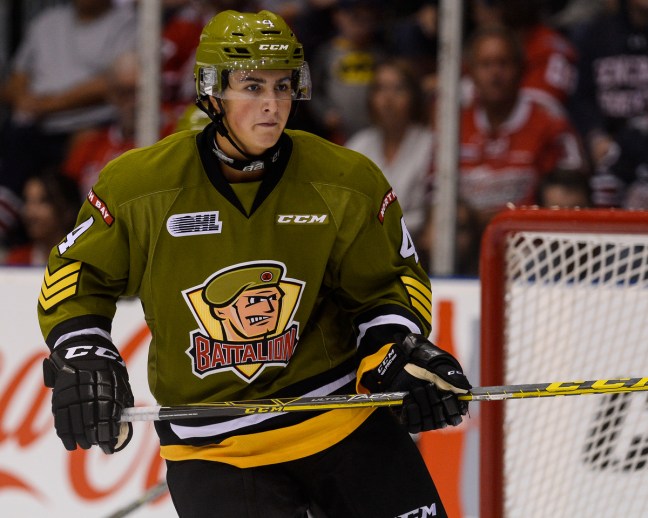
Sean Day: Exceptional or the Exception?

There is no questioning the fact that Sean Day possesses some very elite talent. He is arguably the best skater in his draft class. The tool box is full but at times it looks like he’s using a hand saw instead of a skill saw.
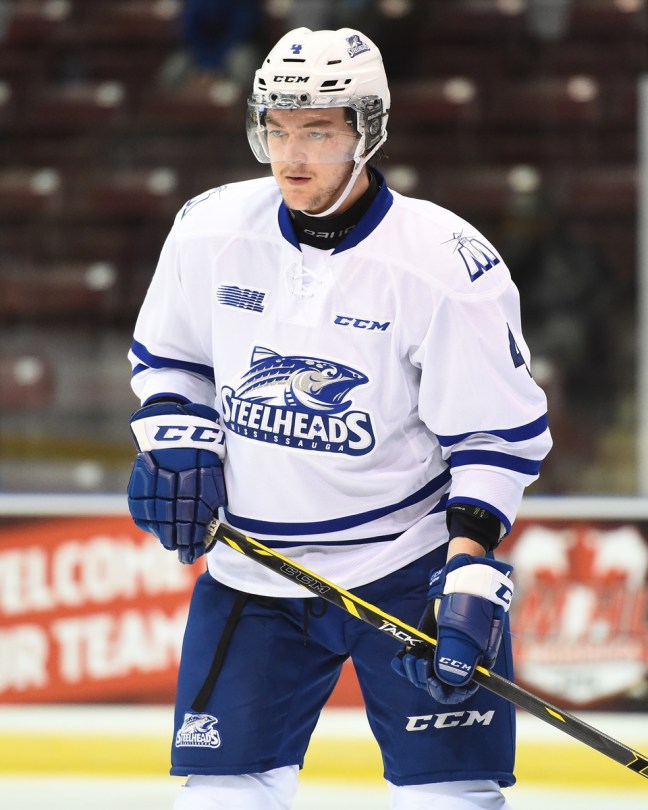
Sean Day of the Mississauga Steelheads. Photo by Aaron Bell/OHL Images

Over the years, I have not always been a big supporter of NHL Central Scouting, and frankly, it appears some NHL teams would rather go their own way as well. Day is ranked 43rd on Central Scouting’s mid-term rankings among North American players. By the time you add in a goaltender or two and Europeans, you are looking at a player ranked in the latter part of the second round.

Will NHL teams see the same thing or will they look at Day as a low risk, very high reward player? Only time will tell. I talked to some of the brightest people covering the Ontario Hockey League and put together their opinions.

Brock Otten who has is excellent OHL Blog here

Brendan Ross director of scouting for TheScout.ca

John Matisz Sports writer/Editor for the Toronto Sun/Postmedia

Neate Sager contributor at Sportsnet

Peter Knuelman who has his OHL Blog here

Kathryn Jean OHL scout for Draft Buzz Hockey

Grant McCagg Head scout for McKeen’s

Gus Katsaros McKeen’s Hockey Director of Analytics & Pro Scouting katshockey@yahoo.com

Corey Pronman Writer for ESPN Insider

OHLW: Personal opinion on exceptional status aside, do you think Day would have benefited more from forgoing exceptional status, say the way Jakob Chychrun did?

While it would be easy to place fault at the decision to accept exceptional status, Sean Day was a beast during his underage draft year and showed the physical maturity, advanced skills and on-ice success to warrant the rare tag. With hindsight to our advantage, maybe he wasn’t quite ready for the psychological pressures accompanying the exceptional status pressures but from an on-ice perspective, he showed he was ready to handle the OHL. Brendan Ross

Yes. There is always something a player can learn from minor midget. In most any year, the top defencemen in the minor midget age cohort are capable of playing in the OHL and not looking that much out of place. That’s not really what development is about. Neate Sager

It’s hard to say in the moment, but looking back at it a couple years later – yes, he absolutely would have benefited from forgoing exceptional status. Day and his father have recently had similar comments including that they would have looked into NCAA options as well. When you are blowing out the competition in minors, it’s hard to predict that you won’t do well going into the next level as an underager. Hockey Canada granted him exceptional status for a reason, but if there were any reservations, this process may need to be looked at. Lack of emotional maturity when he entered the OHL has been brought up a couple times and that is important as you are playing with and against 19 & 20-year olds. – Kathryn Jean

That’s a tough question in hindsight. My gut says no. Day was so much bigger and physically mature than the kids he was playing against, so I’m not sure how much he was really learning. Being able to physically overwhelm people is always going to be a natural instinct over outsmarting them. By transitioning early to the OHL, he was forced to finally not be able to rely on his physical gifts, but instead have to improve the way he thinks the game. This is obviously something he still struggles with at times, but I do think it was probably the right decision to apply for that exceptional status.Brock Otten

That is so hard to say and easy to judge with the benefit of hindsight. As a 15 year old in this league Sean Day did not seem overmatched as some 16 year old 1st round picks are when they enter the league. On top of that he was getting plenty of ice time and playing his trade in games and practice against players older and better then what he would have faced if he had played minor midget or 18U hockey in Michigan. – Peter Knuelman

It’s looking that way I suppose. Obviously there were red flags even early on or he wouldn’t have dropped to fourth in his draft year. Grant McCagg

There’s a point where players are so above the competition that they aren’t learning much anymore and that was partly the case with Day, dominating at lower levels. I think it’s more about what a player does after the process has played out rather than resting on the laurels of being granted exceptional status. Gus Katsaros

The thing with the exceptional status rule is that it should be granted to absolute, no-questions-asked home run kids, and no one else. From what I’ve been told by scouts, Day wasn’t a home run when he applied; there was uncertainty. Chychrun was closer to being “exceptional”, however, I’ve spoken to him about the topic and he doesn’t regret not applying. There’s no rush, especially for defencemen. While hindsight is always 20/20, I think Day would have benefited from either not applying altogether or declining the status when he was accepted. John Matisz

That’s a near impossible question for me to answer. It’s equivalent to asking if the butterfly didn’t flap his wings, would the tornado have happened? Every action triggers an unpredictable sequence of events. Maybe he would have. Maybe it would have been worse.  It’s not like we’ve had a ton of exceptional candidates who have opted out to measure him against either. Corey Pronman

OHLW: One could make the argument that the pressure of being tagged with exceptional status may have affected his performance. How close/far has he been to living up to the expectations?

Given the names and successes of the players who have been granted exceptional status prior to Sean Day (namely, John Tavares, Aaron Ekblad and Connor McDavid), the young defender certainly had big shoes to fill. Despite the legwork and due diligence that Hockey Canada performs with its lengthy exceptional status application process, it was a matter of time that one of these talented kids would fail to live up to the lofty expectations that accompany the tag. There’s no reason to fault Sean for not meeting those expectations. His “failures”, “disappointments” or whatever term you want to apply to his inability to EXCEED expectations (like Tavares, Ekblad and McDavid all did) more so reflect the media’s intense pressures that landed on his shoulders. It’s not as if Day stepped into the OHL and fizzled out in his first year. The big strong, mobile defender stepped into OHL as an underage defenceman (a tough position to play for a player any age) and earned important minutes as a rookie. Since arriving in Mississauga, he’s played in all situations and while he hasn’t necessarily excelled, he has established himself as an OHL player. So, Sean Day hasn’t developed into the go-to stud defender that everyone expected from him but his future still remains bring – as an above-average OHL’er and a professional moving forward. Brendan Ross

Everyone every day is fighting a battle the rest of the world has no idea about it; I’m sure most people read the  recent Damien Cox profile where Day opened up about his closest sibling’s incarceration and his mother’s health challenges. That’s going to weigh on a sensitive 17-year-old whom the hockey world expects to magically turn into a 30-year-old maturation-wise — which some prospects do, to their credit. Day has been pretty far from the hype that was generated, but he was oversold. We should try to extrapolate we would look at him if he had played that minor midget season and entered the OHL in 2014-15 — and Chychrun still goes No. 1 in that hypothetical.Neate Sager

The exceptional status tag has put more pressure on him and I have no doubt that this affected his performance. The fact he wasn’t selected 1st overall like all the other exceptional players and continued to fall to 4th overall already put scrutiny on him before he stepped onto OHL ice. Exceptional players are looked at with a microscope and with the tag people expect to see a great performance each shift. Instead of being compared to guys like Jakob Chychrun, Mikhail Sergachev, and Olli Juolevi, he’s being compared to John Tavares, Aaron Ekblad and Connor McDavid.

I thought Day had a decent first season considering his age finishing with 16 points in 60 games. He finished the season at -35 but on a struggling Mississauga Steelheads team that had a goal differential of -100 and just squeaked into the playoffs. He earned a spot on the U17, but was cut from the U18 team and didn’t get invited to U20. Since he started, he’s struggled with consistency and discipline at times. He looks more refreshed this season and I expect to see him have a good run with Mississauga down the stretch. Kathryn Jean

I don’t think that there is any question it has affected his performance. And it depends on what the expectations are/were. If we’re talking about comparing him to the others who have received exceptional status (Tavares, Ekblad, McDavid), then he’s obviously nowhere near the level of play they had reached by their NHL draft seasons. If we’re comparing him to the average top 5 OHL priority selection (and 18 year old kid), then I don’t think he’s that far off where most kids are. Brock Otten

Well in my opinion he is not the top player in that age group currently playing in the OHL and that is the expectation when one is granted exceptional status. We have been spoiled with Tavares, Ekblad and McDavid and maybe those 3 raised our expectations to unreasonable levels. Just because you are the best player at 14 or 15 doesn’t mean you will be the best player at 17. At the end of the day I would say he is somewhat close in terms of skill but far off in terms of production and putting it all together. Peter Knuelman

Reaching the high expectations that come with being honoured with an entry to the league in such a fashion is difficult for even the most talented players. Some of that falls on Mississauga though, not having iced the greatest teams in the last couple of seasons prior to 2015-16. I’m not convinced he’s lived up to the hype of being a highly touted prospect, but he’s shown the brief glimpses that made him such a desirable asset for an OHL team. A little hot/cold, but he’s shown more with an improved support cast. Gus Katsaros

One could argue he shouldn’t have gotten the tab to begin with. The OHL scouts certainly didn’t seem to buy in, he went 4th overall in his class, the only exceptional player in any CHL league to do so. Corey Pronman

OHLW: There is no questioning the toolbox is full. Some believe the battery that powers the tools isn’t always fully charged. How would you say his work ethic has been, more so this season over past seasons?  

Good question and I am glad you asked it because this is where the frustration comes for scouts watching Sean Day. Above, I spoke to the fact that even though Sean hasn’t met the large expectations that previous exceptional players have met, he is an above-average OHL defender. Conversely, I think where most people become frustrated and critical of Day’s game is when they see how gifted his skill set is and can’t comprehend how he isn’t more driven to reach his fullest potential. To be fair to the young defender (who has had some personal challenges off the ice as well), it’s nearly impossible to measure “desire”, “competitiveness” and similar traits. Under what appears to be a lackadaisical approach, Sean Day may actually be extremely driven to become an NHL all-star. Only he will know. But on the surface, it appears he just doesn’t have the desire to challenge himself to really maximize his elite skills. After watching an impressive Sean Day as an exceptional Compuware defender, I was pretty confident that he’d have no problems translating his ability to dominate with end-to-end rushes in the OHL like he did in minor midget. People forgave Day as a rookie and chalked it up to a slow start and him needing time to adjust. Now, years later, we are still witnessing flashes of high-end skill with the occasional end-to-end rush but because of his inconsistency and underwhelming intensity, I think people tend to prefer players who are ready to skate through walls to reach their fullest potential and that’s why he’s getting passed by. His high end skill still exists but until he shows a consistent spark, I think it’s easier to choose players with more drive and impact in their game. Brendan Ross

His work ethic has not been great in past seasons but this being his draft year he seems to be a lot more focused. Consistency has always been an issue and continues to be, but his talent alone helps keep him in discussions. I think coming out to the media about his personal battles will only help him from this point on. That’s a lot of weight that was lifted off his shoulders considering the fact that most his teammates didn’t even know. Kathryn Jean

With everything that has come out to the public lately, about the issues with his brother, I think that puts a new perspective on things. He even admitted that his head hasn’t been in every game he’s played, thus explaining the hiatus he took from the Steelheads. Is it a work ethic thing? Or is it a motivation (psychological) or conditioning issue? The NHL combine interview process will be incredibly important for him, as he’ll likely have to convince NHL teams that his passion is to play in the NHL (despite everything that’s gone on the past couple of years). Brock Otten

Hard to judge players work ethic based on games as it is just a small piece of the puzzle. You have practice, gym time and other factors that go into developing a hockey player. My main qualm with Day would be that his game seems to lack urgency which some may point to a lack of work ethic or drive. One factor in this may be that since Day is such an effortless skater he comes off as a player who may not be putting in 100% effort at all times. Peter Knuelman

I scout draft eligible players, and really don’t pay much attention to underage players, so I really don’t know how Day played the past few season..Mississauga did not have a lot of draft eligible prospects the last couple of years.  He needs to keep improving his work ethic IMO. –  Grant McCagg

There are some nights that he can look labored or disinterested on the ice, but that’s subjective and not always fully the case. Sometimes I think that’s more of a one-off perception rather than progressive or accurate, because he can show a relaxed state, while being ready to compete. Players don’t have to always be doing something to show that they are working, the observer sometimes I think expects that. Patrolling a defensive zone and ensuring there aren’t holes, or loose men in the area don’t require a lot of movement, it requires diligence. I think that the ‘effort’ should be replaced by an element of smarts, and Day is clearly a cerebral player above and beyond the strict tools. I don’t think there’s been a big difference in how he’s approached the on-ice work ethic, I can’t comment on the off-ice activity. Gus Katsaros

 OHLW: Day is arguably the best skater in his draft class and has shown world class talent at times. He himself has said that his weight control may be the hardest thing for him. Personally, I don’t see it as having a negative effect. What are your thoughts?

I don’t have the luxury of being behind the scenes to assess his fitness levels, nutritional challenges and other off-ice facets of the game that may trouble players so it’s a tough question to address. With that said, in today’s game with players having access to an infinite amount of fitness, nutrition and supporting resources, I don’t believe it to be an insurmountable challenge. OHL players and aspiring athletes have extensive networks and if players are willing to put in the work, they’ll be surrounded by all the help that’s needed to achieve their goals.  Brendan Ross

If he gets to the NHL level, where a team can make the investment in a nutritionist and dietitian, it wouldn’t be a negative. Generally, though, the lower your body-fat percentage, the easier it is to move on the ice and have the aerobic capacity to recover for your next shift. Neate Sager

I think his comments on his weight control being an issue stems from him coming in overweight last season. Along with him being late, his weight was a reason he was turned away from U18 team. I can see that extra weight making him a slight step slower which could have also led to his poor play at the U18 camp. Kathryn Jean

Ask NHL teams if they’d like to have Drew Doughty on their team. How many of them would say no? No question that Doughty wasn’t in the best shape when he played in the OHL, but that’s obviously not the case anymore. We have to remember that these guys are teenagers and learning how to eat/train/maintain is going to have a learning curve. Some kids are just natural gym rats who thrive on being in great shape. Some don’t figure that out until later in their OHL career as they get ready to transition to the pros. Day has already cut some weight and I’m sure he’ll continue to do that. As his conditioning improves, he should be able to take more chances offensively without sacrificing his play/effort at the defensive end. Brock Otten

It doesn’t seem to have had any negative effect on his play in my opinion. It is worrisome though if it becomes a bigger problem down the line. If he has trouble with his weight now how will he control it in the future? Does this point to an issue with work ethic as discussed in the previous question? Based on his play I would not have been able to tell that he has weight control issues. Peter Knuelman

Weight control problems are usually a concern for NHL teams..i think it will affect his draft position, because it points to character and leadership issues in addition to weight concerns. Grant McCagg

He’s going to put on some weight as a pro as well so he’ll have to adapt to a bit of a different body style playing in the professional leagues too. He’ll have to find that optimum weight and then ensure he can operate within that band. I think it will be much worse if he doesn’t get a handle on that after being drafted, however to his benefit, he’ll have support and NHL clubs providing nutrition and lifestyle training. On the grand scale, as long as there’s no adverse effect on the type of skills he brings to the table, I don’t see a major negative here. Gus Katsaros

I could watch Day skate all day. It amazes me; it looks like he’s floating out there, like his stride doesn’t require an ounce of energy. I don’t know the exact relation between weight and skating, but I would imagine dropping a few pounds wouldn’t hurt. I think everybody, athletes or fans or media, can relate to Day when he says cutting weight is difficult. It’s not easy for anyone. But if he wants to be a world-class athlete, he has to figure it out. There are trainers and nutritionists out there who would gladly take him on as a client. John Matisz

OHLW: I’ve seen it mentioned that at times Day looks disinterested/bored out there and that he is just too good for the OHL, much like he was too good for Midget and made the early jump to the OHL. What are your thoughts and does he have a legitimate chance to play in the NHL next season?

Not to be a pessimist but playing in the NHL next season won’t be a reasonable option for Sean Day. Making the direct jump to professional hockey is challenging enough for even the two or three drafted prospects each year. In Day’s case, whoever decides to draft him will want to see progression and consistency in his game. He needs to dominate the OHL, show an interest achieving an elite level of play in the OHL and prove that he can handle the challenges that professional hockey will throw at him. Brendan Ross

As far disinterested/bored goes, people project what they want to see on to a player, and that theory sounds like confirmation bias — ‘he was so good but he’s not performing, ergo, he must be disinterested/bored.’ Now, sometimes gifted players can get frustrated playing with less skilled teammates than they will have at the next level, that’s true, but ultimately successful people in any endeavor find a way.

As far as the NHL next year goes, it’s hard to see that happening. Neate Sager

I think that’s more of the case when he played in midget. I don’t think he got off to the start he wanted and that with a mixture of off-ice distractions and lack of success may have resulted in him not enjoying hockey. I believe he is a bit of a project player and I don’t see him making an immediate jump to the NHL. I think he still has some things he can work on in junior. While the skills are all there, his consistency continues to be a question. If he returns, he has a great opportunity to be on another contending team unless Michael McLeod, Alex Nylander and Nathan Bastian all make the jump. He also has the chance to make the World Junior team which would make for a great experience before turning pro. Kathryn Jean

I’d say that’s ridiculous. I’d say he definitely goes through stretches of looking disinterested, but I think we can chalk that up to the issues I touched on earlier (with his brother), and not being above his competition. He still has a ton to learn at this level. He’s no longer on the top powerplay unit for the Steelheads and his offensive decision making often leaves a lot to be desired. I don’t think there is any chance he ends up in the NHL next season. Brock Otten

I have seen Mississauga play live 5 times year and Sean Day has looked for the most part invisible every time except for when he received a 5 minute boarding Major against Niagara. I’m not sure if he is disinterested or board, again I feel it looks as though his game lacks urgency. He has seemed better since the Christmas break when he had an extended absence from the team. The chance to clear his mind seemed to have done some good.

As for playing in the NHL next year: It is so hard for defencemen to make that jump that I would go out and say there is a 0% chance he makes that jump next year and I don’t think he makes the jump for his 19 year old season either. If he is having troubles with the mental side of the game at the OHL level then he will get buried in the NHL. Peter Knuelman

I’m not sure why he’d be disinterested. He’s far from being a dominant player this season.  I think his chances of playing in the NHL next season are very low….there are question marks about his hockey sense, attitude, competitiveness, vision and offensive upside. Great skating alone won’t get you into the NHL. Grant McCagg

He’s been a pretty good not amazing OHLer, so not sure I agree with that. He has a ways to go still before he’s a top-tier player in that league. Corey Pronman

 I’ve talked about this with an OHL scout. He said there’s a difference between making being good at hockey look effortless (Joe Thornton) and appearing disinterested (Day). The scout told me to watch a player compete for puck possession along the boards (Is he tentative? Submissive? Does he battle? Does it look like he cares?). Apparently that’s the best way to identify disengagement. At times — in other words, only on certain plays — Day seems disengaged. No, he will not play in the NHL next season. I don’t think that’s on the table at this point. John Matisz

 I’m not sure I buy that he’s bored or too good for the OHL. It’s still quite the leap from the developmental leagues to the OHL, and an exponential jump to the NHL even for exceptional players. Personally, while I think he can earn a spot with a team that drafts him, it’s not as likely that he ends up in the NHL 2016-17 beyond the nine games allowed prior to burning a year off the entry-level contract. Having said that, there’s an exceptional skill set there and sometimes the biggest motivation is someone telling you, ‘you can’t do this.’ Gus Katsaros

OHLW: If you were running the draft for an NHL team and had multiple first round picks, would you select him in the first round? On the flip side, if you only had one first round pick, would you select him?

I will politely answer ‘no’ to both scenarios. Sean Day certainly owns first round worthy skills and I’ve said that for years now but if I’m putting my name to a first round player, I want to see several key attributes and he’s lacking in one major one. While skill is a major indication of many players selected in the opening round, I think determination and an ability to exceed expectations through an unrelenting work ethic (on and off the ice) is one attribute that I wouldn’t want to budge on. I think you want a player you know will dig down deep and do whatever it takes to win. You want to know that there’s an excellent chance that a first round pick will persist and earn a roster spot regardless of what’s thrown at him. At this point, Day’s biggest question marks are surrounding his work ethic, desire and determination. Brendan Ross

Depends on the draft slot, but with only one first-rounder, no, since that is the pick a team has to get right. If I had a second, somewhere in the 20s, I would take the home run swing, especially if I had wind of a divisional rival hankering to do the same. Neate Sager

If he was the best player available, then yes on both questions. I think he will go as high as a late first round pick but there are better defensemen ahead of him. Kathryn Jean

No (to both). At this point, I don’t think Sean Day is a first round pick. When you factor in his level of play and the concerns over his passion for the game, an NHL scout would be crazy to use a first round pick (in a quality draft year) on him. At this point, I think he’s still a top 100 selection, and will have value as a second or third rounder. Brock Otten

 First off whether a team has 1 first round pick or multiple first round picks it shouldn’t make the selection of Sean Day more or less palatable. Once the other first round picks have been taken they become sunk costs and in no way should affect a team’s justification in drafting Sean Day. At the end of the day it should come down to risk/reward and if the reward of drafting Sean Day outweighs the risks when comparing him to other options at the draft table. As of right now I would not draft him. There is no denying that he has a higher ceiling then those who will be available near the end of round one but his low floor and questions about how likely he is to reach his ceiling would be enough for me to look in another direction. Peter Knuelman

I don’t think multiple picks would affect my strategy at all. Best player is the best player. As of now, he’s not a first round prospect. Corey Pronman

 No and no. Grant McCagg

I think this is a difficult question to because it’s likely that if I have multiple picks in the first round, I’m in a spot where I’m rebuilding my club, or have the good fortune of picking up a late first by giving up a valuable asset. His skating is the element that I feel would be the biggest asset in the NHL, especially with the requirement to have a mobile back end. On a personal note, I probably would look at a forward prior to the defenseman in that scenario, however, and then wait for project rearguards in the second round and beyond. With a lone first round pick – likely mid to late in the round – once again, I’d lean towards a forward prior to taking a defenseman, even with the potential that Day exhibits. Gus Katsaros

I’ve been told by multiple talent evaluators that he’s a first-round talent, no doubt, but there are too many question marks for a team to use a top pick on him. We’ll see what happens between now and June. Don’t be surprised if he is interviewed by every NHL team. I don’t know enough about him or the draft class to peg him in or outside the top 30. John Matisz

OHLW: Predictions at this stage are virtually impossible to make. Given what you have seen, how do you see his NHL career playing out?

Most people in the hockey world are rooting for Sean Day. I know I am. He’s just too gifted not to warrant being drafted but once his name gets called out, the onus will be on him to earn his NHL spot. Can I guarantee that he’ll become an everyday NHL’er? No. I’ve seen too many talented players bounce between minor leagues. With that said, I think Day’s game is starting to show more signs of life and he’s been playing better since returning to the lineup. The battle is still an uphill one and he’ll be challenged a lot to really show his stuff – maybe more than the average draftee – because people want to see him capitalize on his skill. He has the potential to become a top pairing defender but realistically, I think he’ll comfortably land as a 5/6 defender who can chip in offensively. All eyes will be watching come draft day and it will be very interesting to see who takes a chance on this talented but polarizing blue liner. It only takes one team to like him! Brendan Ross

He might need some more obstacles and second and third second chances, but he can get there. It might just come at age 22, not age 18 like so many people anticipated. – Neate Sager

 I think he has the ceiling to be a top 4 defenseman in the NHL with significant power play time. Another year in junior and perhaps even a year in the AHL will only benefit his game. I think it is important that whichever NHL teams drafts him, does not rush him. Kathryn Jean

 I see a lot of people talk about how high Sean Day’s potential is. Most potential of any defender in the draft is something I’ve seen uttered. I just don’t think I agree with it. That isn’t to say that I don’t see Day as an NHL player: far from it. It’s more that I’m just not sure I see a defender who has significant offensive potential at the next level. Just because a defender is an elite skater doesn’t mean that he has to be (or have the potential to be) a dominant offensive player. There are other skills which have to factor into the equation. I’m just not sure Day is a natural distributor or play creator. He’s at his best when he keeps the game simple, using his skating ability to get the puck out and making a good outlet pass to start the rush. When he starts to push towards the offensive zone, he can be turnover prone in the neutral zone. And his ability to run the point on the powerplay remains a major work in progress (a place where most offensive defenders make their mark). In reality, I see Sean Day developing into a quality NHL defender, but I think it will be more of a stay at home guy; using his mobility and size to play a shutdown role. We saw this at the Top Prospect’s Game this year. When he keeps the game simple, he becomes a very effective player in his own zone. Brock Otten

I’m an optimist so I would like to think that he gets over whatever has seemed to have stunted his development the last few years and turns the corner with the mental aspect of his game. His skating skills alone give him a heads up on his competition when it comes to a future at the next level. I believe he will find a spot somewhere and with continued development make his mark in the NHL. He may not be the star that people predicted when he received exceptional status but should have a long NHL career ahead of him. Peter Knuelman

I’m not certain he’ll play in the NHL.  I believe he might be be anywhere from a second-pairing defenceman to a bust. Grant McCagg

 Projecting players here is an art. Raw skills can reach potential, or can just as easily fade away without proper development. I’m not convinced he becomes a big impact blueliner at this point, likely settling into a solid second pairing with spot duty on the first unit power play or a solid second unit. If I had to make a certain projection, I’d lean towards the second pairing and second power play unit and rank him in our lists accordingly. – Gus Katsaros


Nicholas Caamano – Player Profile – Flint Firebirds

Height:  6’1”

Weight:  184 pounds

Date of birth: September 7, 1998 Ancaster, Ontario

Position:  Right Wing

Shoots:  Left

OHL Draft: Round 2, 27th overall 2014 Priority Selection.

Caamano played his Minor Midget hockey with the Hamilton Jr Bulldogs during the 2013-14 season and scored 22 goals and 22 assists in 40 games. He added 6 more goals and 7 assists in 10 playoff games.  After his season, he appeared in 3 games for the Ancaster Avalanche of the Greater Ontario Junior Hockey League and scored one goal to go along with four assists.

Nicholas Caamano of the Flint Firebirds. Photo by Terry Wilson / OHL Images.

Caamano also played in the OHL Gold Cup – 1 goal in 5 games – and the OHL Cup – pointless in 3 games.

The Plymouth Whalers (now the Flint Firebirds) made Caamano their second round choice, 27th overall in the 2014 Ontario Hockey League Priority Selection.

Last season was Caamano’s first in the OHL. He played in 64 games for the Whalers and scored 3 goals and added 6 assists while earning the trust of his coaches.

Caamano is one of the youngest players available for the 2016 National Hockey League Draft, making the age cut by just one week. To date, Caamano has played in 46 games scoring 16 goals and adding 9 assists.

Last season he began getting more and more ice time as he earned the trust of the coaches, and it’s carried into this season. He works extremely hard and likes to take the body at every opportunity.  He doesn’t bring fans to their feet but he is a very smart player. He possesses an uncanny knack for finding open spaces and giving mates an option. He has a quick release on his shot and it’s hard and heavy. He’s also a very good skater who is not afraid to take on defenders one on one.

Caamano also works as hard defensively, but like all young players needs to make improvements.

Caamano was ranked 148th on NHL Central Scouting’s midterm rank. He was neither on Central Scouting’s preliminary list of players to watch in the preseason or their updated list in November.

Kyle Maksimovich – Player Profile – Erie Otters

Height:  5’9”

Weight:  174 pounds

Date of birth: March 10, 1998, Hamilton, On

Position:  Left Wing

Shoots:  Left

OHL Draft: Round 3, 59th overall, 2014 Priority Selection

The Erie Otters have been ranked at the top of the Canadian Hockey League’s top 10 rankings almost from day one, and they are doing it with a roster makeup where over half the forwards are sub 6 foot with talent and an ability to skate. Maksimovic is one of those diminutive players.

Kyle Maksimovich of the Erie Otters. Photo by Terry Wilson / OHL Images.

Maksimovich currently sits fourth on the team in points (55) and third in goals (22) and assists (31) in 48 games. His 22 goals come on just 109 shots for a 20.2 shooting percentage. He’s been a model of consistency going pointless in consecutive games just twice this season: 3 games from Oct 15-17 and 2 games on Nov 13 and 14.

Maksimovich played his minor midget hockey for the Toronto Marlboros. In 33 games, he tallied 24 goals along with 34 assists. In 14 playoff goals he contributed 5 goals and 8 assists. Maksimovic also appear in the OHL Gold Cup -16 (4 goals, 3 assists in 5 games) and the OHL Cup (2 goals, 6 assists in 7 games) winning a silver and a championship respectively.

Last season Maksimovich stuck with the Otters who had a very deep lineup. He played in 56 games and scored 6 goals to go along with 18 assists. But he gained valuable experience as the Otters went on to the OHL Finals – something they want to duplicate this year. He appeared in 20 playoff games scoring 3 goals and 5 assists.

The first thing that will come to mind for the fandom is the size. Admittedly, at 5’9” Maksimovich is undersized. But despite the size, he has no fear of going into the corners to battle, nor does he shy away from going to the net. He also plays with a high level of energy and hard to contain.

At least at this level, Maksimovich overcomes his size with his speed and smarts. He has the ability to expose defences with his creativity and passing. When he gets into a position to shoot, it’s usually on target and with a purpose.

Maksimovich’s defensive game continues to be a work in progress, but he’s coming along. He’s getting into shooting and passing lanes, blocks shots and kills penalties.

Maksimovich was ranked 111th on NHL Central Scouting’s midterm rankings in January.

Cliff Pu – Player Profile – London Knights

Height:  6’1”

Weight:  188 pounds

Date of birth: June 3, 1998, Richmond Hill, Ontario

Position:  Center/Right Wing

Shoots:  Right

OHL Draft: Round 1, 16th overall, 2014 Priority Selection (Oshawa Generals)

Pu played his Minor Midget hockey for the Toronto Marlboros in 2013-14. In 33 games, Pu scored 23 goals and added 24 assists. He added 4 goals and 13 assists in 14 playoff games. Pu is also an OHL Cup Champion and during that run, he scored 5 goals and 4 assists in 7 games. He was also a silver medalist at the OHL Gold Cup where he scored 3 goals and 5 assists in 5 games.

Pu also represented Canada at the World Hockey Challenge Under-17. In 5 games, Pu scored once.

Cliff Pu of the London Knights. Photo by Aaron Bell/OHL Images

Offense was never a problem for Pu and the Oshawa Generals picked him in the first round – 16th overall – at the 2014 OHL Priority Selection. During the 2014-15 season, Pu appeared in 17 games for the Generals and scored twice while adding an assist before a trade sent him to the London Knights.

Pu was sent to the Knights along with Josh Sterk, two second round picks and a third round pick for Dakota Mermis and Michael McCarron as the Generals loaded up for a Memorial Cup run. Pu would appear in 24 games for the Knights scoring twice and adding 4 assists.

Pu is currently ranked 83rd among North American skaters on NHL Central Scouting’s midterm ranking. He finds himself in the same type of situation that the Soo Greyhounds’ Zachary Senyshyn was in a year ago – playing behind a tremendous amount of depth.

Through 43 games this season, Pu has 9 goals and 12 assists and a respectable 52.8% in the faceoff circle. His 9 goals come on 73 shots for an above average shooting percentage of 12.3%. And Pu is doing this playing a bottom six role with little to no powerplay time.

Potentially, Pu looks to be a power forward. One of his best assets is taking the puck straight to the net. But he also has good hands. He has a very good, accurate and fast shot, but could work on getting it off quicker and cleaner. He will not shy away from the physical battles; in fact he seems to relish it. And he’ll battle as hard defensively. He’s shown that he can create his own offense while also creating offense for his teammates. Pu is a very good skater who is adept at being both a playmaker and a goal scorer.

There’s been an overall improvement to his game from a year ago, where he looked to play the game from the outside. His development has continued in an upward trend and he no longer plays on the perimeter. He has the size and strength to play in the dirty areas and he’s shown that this season. He also has excellent anticipation and is using it more effectively to cause turnovers and create chances.

Like Senyshyn a year ago, it’s difficult to predict what Pu could have done with a more expanded role. Although it is a very small sample size, his most productive offensive output came while the Knights top line of Matthew Tkachuk, Christian Dvorak and Mitch Marner were at the World Junior Championships.

NHL Hall of Famer and Pu’s former coach Paul Coffey talks a little bit about Pu here

OHL’s Draft Eligible Statistical Leaders for January

January has come and gone along with the snow (hopefully?) and it’s time to look at the OHL players eligible for the NHL draft and the leaders in a variety of categories. As we’ve done in the past, we only look at players eligible for the first time. However, when it comes to the goaltenders, we look at those previously passed over.

The London Knights’ Matthew Tkachuk leads the way in the point race with 70 points in 38 games. Alex DeBrincat of the Erie Otters follows just behind with 65 points in 39 games. Climbing fast, and quietly, is Adam Mascherin of the Kitchener Rangers with 59 points in 44 games.

DeBrincat has a solid lead in the goal scoring department with 36 goals in 39 games. Alexander Nylander of the Mississauga Steelheads leads the second tier with 26 goals in 41 games followed by Mascherin with 25 goals in 44 games.

On defence, all eyes are turning to Cam Dineen of the North Bay Battalion who leads with 44 points in 47 games. Mikhail Sergachev of the Windsor Spitfires is next with 37 points in 48 games followed by Jakob Chychrun of the Sarnia Sting with 32 points in 44 games.

Points Leaders
Player Team GP G A Pts
Matthew Tkachuk London Knights 38 16 54 70
Alex DeBrincat Erie Otters 39 36 29 65
Adam Mascherin Kitchener Rangers 44 25 34 59
*Alexander Nylander Mississauga Steelheads 41 26 32 58
Taylor Raddysh Erie Otters 46 18 37 55
Michael McLeod Mississauga Steelheads 47 19 35 54
Kyle Maksimovich Erie Otters 47 22 31 53
Will Bitten Flint Firebirds 46 21 27 48
Logan Brown Windsor Spitfires 40 9 36 45
Nathan Bastian Mississauga Steelheads 46 13 31 44
Goal Scoring Leaders
Player Team GP G GPG
Alex DeBrincat Erie Otters 39 36 0.92
*Alexander Nylander Mississauga Steelheads 41 26 0.63
Adam Mascherin Kitchener Rangers 44 25 0.57
Kyle Maksimovich Erie Otters 47 22 0.47
*Max Jones London Knights 42 21 0.50
Will Bitten Flint Firebirds 46 21 0.46
Michael McLeod Mississauga Steelheads 47 19 0.40
Assist Leaders
Player Team GP A APG
Matthew Tkachuk London Knights 38 54 1.42
Taylor Raddysh Erie Otters 46 37 0.80
Logan Brown Windsor Spitfires 40 36 0.90
Michael McLeod Mississauga Steelheads 47 35 0.74
Adam Mascherin Kitchener Rangers 44 34 0.77
*Cam Dineen North Bay Battalion 47 33 0.70
*Alexander Nylander Mississauga Steelheads 41 32 0.78
Defencemen Point Leaders
Player Team GP G A Pts
*Cam Dineen North Bay Battalion 47 11 33 44
*Mikhail Sergachev Windsor Spitfires 48 13 24 37
Jakob Chychrun Sarnia Sting 44 8 24 32
Victor Mete London Knights 47 6 25 31
Benjamin Gleason Hamilton Bulldogs 46 7 22 29
*Olli Juolevi London Knights 36 5 22 27
*Markus Niemelainen Saginaw Spirit 48 1 23 24
Plus/Minus Leaders
Player Team GP +/-
Victor Mete London Knights 47 +39
Kyle Maksimovich Erie Otters 47 +30
*Olli Juolevi London Knights 36 +29
Matthew Tkachuk London Knights 38 +25
Adam Mascherin Kitchener Rangers 44 +19
Logan Brown Windsor Spitfires 40 +18
*Max Jones London Knights 42 +17
Penalty Minutes Leaders
Player Team GP PIM M/G
Givani Smith Guelph Storm 45 89 1.98
Logan Stanley Windsor Spitfires 46 88 1.91
*Max Jones London Knights 42 82 1.95
Ben Hawerchuk Barrie Colts 39 66 1.69
*Brock Philips Guelph Storm 30 58 1.93
Keaton Middleton Saginaw Spirit 48 58 1.21
Michael McLeod Mississauga Steelheads 47 55 1.17
Faceoff Leaders (Wins)
Player Team GP FOA FOW %
Michael McLeod Mississauga Steelheads 47 1061 621 58.5
Logan Brown Windsor Spitfires 40 753 401 53.3
Cliff Pu London Knights 43 616 325 52.8
Hayden Verbeek Soo Greyhounds 42 599 287 47.9
*Domenic Commisso Oshawa Generals 47 547 265 48.4
Brandon Saigeon Hamilton Bulldogs 43 502 259 51.6
Shootout Leaders
Player Team SOG SOA Goals %
Logan Brown Windsor Spitfires 1 1 1 100.0
Alex DeBrincat Erie Otters 3 3 2 66.7
*Alexander Nylander Mississauga Steelheads 4 4 2 50.0
Will Bitten Flint Firebirds 2 2 1 50.0
Michael McLeod Mississauga Steelheads 2 2 1 50.0
Shooting Percentage Leaders
Player Team GP Shots Goals SH%
Will Bitten Flint Firebirds 46 100 21 21.00
Alex DeBrincat Erie Otters 39 173 36 20.81
Kyle Maksimovich Erie Otters 47 106 22 20.75
*Alexander Nylander Mississauga Steelheads 41 139 26 18.71
*Boris Katchouk Soo Greyhounds 44 87 16 18.39
Goaltenders Leaders – Goals Against Average
Player Team GP Min GA Avg
***Jeremy Helvig Kingston Frontenacs 16 902 34 2.26
Tyler Parsons London Knights 33 1908 82 2.58
*Stephen Dhillon Niagara Ice Dogs 20 1101 51 2.78
***Jeremy Brodeur Oshawa Generals 37 2131 99 2.79
***Leo Lazarev Ottawa 67’s 33 1898 89 2.81
Evan Cormier Saginaw Spirit 42 2333 134 3.45
Joseph Raaymakers Soo Greyhounds 21 1162 75 3.87
***Connor Hicks Hamilton Bulldogs 18 990 70 4.24
***Zack Bowman Sudbury Wolves 29 1535 111 4.34
Dylan Wells Peterborough Petes 20 1124 85 4.54
Troy Timpano Sudbury Wolves 21 1188 86 4.34
           
Goaltending Leaders – Save Percentage
Player Team GP SH SVS SV%
***Jeremy Helvig Kingston Frontenacs 16 454 420 0.925
Tyler Parsons London Knights 33 952 870 0.914
*Stephen Dhillon Niagara Ice Dogs 20 545 494 0.906
***Jeremy Brodeur Oshawa Generals 37 1029 930 0.904
***Leo Lazarev Ottawa 67’s 33 913 824 0.903
Evan Cormier Saginaw Spirit 42 1271 1137 0.895
Joseph Raaymakers Soo Greyhounds 21 663 588 0.887
Troy Timpano Sudbury Wolves 21 752 666 0.886
***Zack Bowman Sudbury Wolves 29 953 842 0.884
Dylan Wells Peterborough Petes 20 689 604 0.877
***Connor Hicks Hamilton Bulldogs 18 568 498 0.877
           
*Rookie
**Leads League
*** Was eligible for 2015 draft but not selected and eligible for 2016

Benjamin Gleason – Player Profile – Hamilton Bulldogs

Height:  6’1”

Weight:  168 pounds

Date of birth:  March 25, 1988. Ortonville, MI

Position:  Defence

Shoots:  Left

OHL Draft:  2nd round, 26th overall, 2014 Priority Selection (London Knights)

Gleason played his daft year for Honeybaked U18 squad. The cousin of NHL’er Tim Gleason played in 22 games scoring once and adding 5 assists.  The London Knights would make him their second round selection at the 2014 Priority Selection.

Last season with the Knights, Gleason appeared in 41 games registering 5 assists. With a veteran lineup and depth in London, Gleason would sometimes play on the wing. That depth in London was also evident this season, and after two games the Knights traded him to Hamilton for a second round pick and a conditional 15th rounder.

The move paid dividends for Gleason. He leads the Bulldogs’ defenders in goals (7), assists (21) and points (28).

Benjamin Gleason of the Hamilton Bulldogs. Photo by Aaron Bell/OHL Images

Gleason is a strong skater with excellent agility enabling him to beat on coming checkers. He can make a very good first pass as well as skate the puck out of danger. He’s a two way defender who is currently anchoring the Bulldogs’ blue line. At 6’1” he has good size but needs to add some serious bulk to his frame to be able to battle with forwards in the defensive zone.

Gleason appeared on NHL Central Scouting’s preliminary list of players to watch as a C prospect on both their September and updated November list. A C ranking is considered a 4th, 5th or 6th round pick. On the Mid-Term list released in January, Gleason was ranked 53rd among North American skaters.

I had the chance to talk to Reed Duthie, the play by play voice of the Bulldogs on Cable 14 about Gleason.

OHLW: Ben played some wing for the Knights last season because of the veteran depth they had. He came to Hamilton with the potential to lead the Bulldog’s blue line. Would you say he’s approached that expectation?

Reed: Without a doubt, Ben immediately filled a need for an offensive minded defenceman and as a 17 year old has played in all situations for the Bulldogs. Ben is known for being an offensive player but he has developed his all around game to the point where he is now a trusted member of the Bulldogs PK group, which has continuously improved from the beginning of the season. Ben is someone that fans of the organization, as well as in the organization, are very excited to see develop.

OHLW: Ben is the much younger cousin of NHL’er Tim Gleason. Do you see any similarities at all between them?

Reed: Ben & Tim may be related but are very different players, Tim was a stalwart defenceman who was never the greatest skater but was always tremendous in his positioning. Ben’s calling card is his offensive talents, one of the slickest skaters you will find anywhere in junior hockey, owns a terrific shot and tremendous vision for passing lanes. Ben has improved his defensive game but is still working to approach his cousin on that side of the puck, however Ben, much like his cousin, has a penchant for laying punishing open ice hits when the opportunity arises.

OHLW: One of Ben’s biggest needs is to add some bulk to his frame. How is he handling the battle with bigger forwards in the league?

Reed: Ben is stronger then I believe he gets credit for, he doesn’t always win the board battles with consistency, however he does not shy away from battles along the back boards nor does he shy away from the biggest of the opposition. We have seen Ben battle the likes of Lawson Crouse and be able to use his combination of skills, hockey IQ and physicality to come away with victories in those 1 on 1’s. As Ben continues to bulk up and his game continues to develop, you will see him win those battles with the consistency scouts are looking for.

OHLW: Ben is a strong skater with excellent agility and ability to beat the forecheck. He can also skate the puck out of his end or make a good first pass. Do you feel he needs to improve any aspect of his skating?

Reed: No, Ben’s skating should be one of the last concerns of his development. Ben is an elite skater & we actually just saw him go 1 on 5 against Oshawa and nearly score a spectacular goal using his speed & agility to elude checkers in the neutral zone and break into open ice nearly scoring a highlight reel goal.

OHLW: How would you say Ben’s vision is?

Reed: Much like his skating, Ben’s vision is elite. Where Ben will get himself in trouble is seeing a long out passing lane and trying to fit it into too small a space or trying to make too fine a play. Ben’s out passes are crisp & authoritative and his offensive zone vision is nothing short of fun to watch. While working the top of the formation on the PP Ben will find passing lanes to the front of the net or a crowded area and fit the puck right in to his teammates’ tape.

OHLW: Ben began on Central Scouting’s list of players to watch as a C prospect. On their preliminary list he’s climbed up to 53 on the North American skaters list. And he’s really coming along on the ice now. Can you see him jumping into the second round?

Reed: I do believe Ben will climb into the 2nd round of the NHL draft and even in the 2nd round has potential to be an incredible steal (reminiscent Shea Weber, not comparing the players just steal value). At 17 you are seeing the makings of a potentially elite offensive defenceman who’s defensive game continues to grow. In a position that is the hardest to make the jump to each successive level, Ben continues to grow his game.  As a side note; being taken in the 2nd round would be great career symmetry for Ben Gleason, was taken in the 2nd round of the OHL Priority Selection Draft & he was traded to Hamilton for a 2nd round selection, so a 2nd round selection in the NHL only seems to make sense.

OHLW: We are seeing more and more puck moving defensemen that can skate. The NHL is moving that way and so is the OHL. Do you see shut down defencemen such as, say Keaton Middleton in Saginaw dropping in drafts because of the attention to puck moving defencemen? On the other hand, guys like Mikhail Sergachev in Windsor are excellent at both ends, but we don’t find those guys every day. What’s your take and apply it to Ben?

Reed: If Ben’s defensive game was more defined then you might hear his name in the same conversations in which Sergachev’s is being discussed. Teams are looking for the home run pick and defenceman that can play both ends of the rink are so valuable because offensively it gives you an extra weapon while not giving anything up in your own end. Those type of players, who do it with the ability of a top pairing player in the NHL are extremely rare and that would be the reason you see Sergachev & of course Chychrun getting so much attention on draft boards. The reason I would say don’t sleep on Ben Gleason is because physically he hasn’t developed as fast as those two, and his game hasn’t matured as fast (obviously a major relation there in junior hockey) but when you consider all of the tools Ben Gleason has, he could find his way into discussions with those upper echelon names by the end of the 2016-17 season & an NHL could be very, very happy with their selection of him.

OHLW: Can you give us some insight to Ben Gleason the person as opposed to the player?

Reed: Ben is the kind of person that an organization can really build around, everyone from coaches, to scouts, to teammates, like Ben as a person and consistently comment on his dedication to working on his craft and his drive to consistently improve as a player on the ice to help his team. For an organization in its’ first season in the OHL, Ben Gleason was exactly the type of person the Hamilton Bulldogs needed to bring in, both on the ice where he is very exciting to watch as well as off the ice where he has been tremendous in his first season in the community.

OHL Draft Eligible Player of the Month for January: Cam Dineen

Cam Dineen is my first back to back winner as the draft eligible player of the month. The North Bay Battalion defender is coming off a very strong December in which he was named the Ontario Hockey League’s Rookie of the Month and Defenceman of the Month and has carried it into January.

Cam Dineen of the North Bay Battalion. Photo by Aaron Bell/OHL Images

Earlier this month, Dineen appeared on NHL Central Scouting’s mid-term rank at 117th among North American skaters. Many are realizing that ranking is just too low.

Dineen appeared in 13 games for the Battalion in the month of January. He scored 6 goals and added 7 assists in those 13 games. He was held off the score sheet just 3 times and closed out the month with a five game point scoring streak.

It wasn’t all just about the points for Dineen, but when he contributed those points. He has been “clutch” during the month, a “money player”. Consider this when you look at his six goals:  3 game tying goals to force overtime, 1 overtime game winner, and 2 game winners in regulation. It doesn’t get more clutch than that.

Dineen is now second among defencemen and rookies in the scoring race with 11 goals and 33 assists in 47 games.

Also considered were Adam Mascherin of the Kitchener Rangers and Mikhail Sergachev of the Windsor Spitfires. Mascherin scored 7 goals and 10 assists in 17 games while Sergachev scored 3 goals and added 9 assists in 12 games.

In goal, Evan Cormier of the Saginaw Spirit appeared in all but one game for the Spirit. He had a record of 4-6-0-1 with a goals against average of 3.03 and a save percentage of .908.

Previous winners

December – Cam Dineen

November – Matthew Tkachuk

October – Alex DeBrincat

September – Matthew Tkachuk

Laberge and Dubois shine bright in 3-2 Team Orr win

Press release

Vancouver, BC – A long way from home, QMJHL stars Pascal Laberge (Victoriaville Tigres) and Pierre-Luc Dubois (Cape Breton Screaming Eagles) shone brightly in Vancouver, leading Team Orr to a 3-2 win at the 2016 BMO CHL/NHL Top Prospects Game with three points each.

The two connected for the game’s deciding goal in the third period just 11 seconds after Team Cherry had fought back to tie the score at two. Laberge found Dubois on a nifty give-and-go that started when Dubois picked off a turnover in the neutral zone.

Laberge’s two goals and an assist earned him Jim Gregory Player of the Game honours as Team Orr took a sixth straight decision at the event dating back to 2011.

“Dubois and I played together at Under-17’s and we had good chemistry together tonight,” said Laberge post-game. “It’s just an amazing feeling and my linemates and I worked really well together out there.”

The two clubs played intense, fast-paced hockey in front of over 10,000 fans at Pacific Coliseum, drawing strong praise from Bobby Orr.

“I’ve been a part of a lot of these games and that was probably the best yet,” said the legendary blueliner. “It was a heck of a hockey game and every kid on the ice played very well. There was some great goaltending, strong defence and it’s the best game in this event that I’ve been a part of.”

In fitting fashion, the hometown favourite got on the board first as Vancouver Giants forward Ty Ronning, who was a late addition to Team Cherry’s roster, found the back of the net after connecting on a give-and-go with linemate Jordan Kyrou (Sarnia Sting). Ronning had his initial attempt thwarted by the pad of Carter Hart (Everett Silvertips) but stayed with the play to bang in the rebound 3:09 into the first period.

Team Orr had its moments in the first despite coming away from the opening 20 minutes down 1-0. Team Cherry goaltender Evan Fitzpatrick (Sherbrooke Phoenix) was great when called upon, making a big save off QMJHL opponent Dubois early on and followed up that effort with bang-bang saves off Jack Kopacka (Sault Ste. Marie Greyhounds) in the slot moments later.

With a clean sheet before them, the goaltenders got a workout in the opening half of the second period as a back-and-forth affair saw free-flowing offensive creativity from both teams.

Fitzpatrick continued his strong play for Team Cherry, finishing his half of the game flawless with 17 saves as he turned aside high quality chances from Alexander Nylander (Mississauga Steelheads) and Max Jones (London Knights) off the rush.

While Fitzpatrick was replaced by Zach Sawchenko (Moose Jaw Warriors), Hart gave way to Dylan Wells (Peterborough Petes) at the opposite end after turning aside 15 of the 16 shots he faced.

With increased pressure, Team Orr managed to knot the score at one before the expiration of the second. Laberge took a pass as his line entered the offensive zone, toe-dragging the puck past an opponent to create a lane to the net and beat Sawchenko over the blocker at 17:09 with assists from Dubois and Libor Hajek (Saskatoon Blades).

Team Cherry held a 22-20 edge on the shot clock after 40 minutes with the two sides deadlocked at one.

After a relatively cautious opening half of the third, Wells would be tested in goal for Team Orr as he was forced to make big-time saves off defenceman Sean Day (Mississauga Steelheads) as he beat his man coming in off the blueline and, moments later, big winger Tim Gettinger (Sault Ste. Marie Greyhounds) on the doorstep.

Wells kept the game tied long enough for Laberge to strike for his second of the night on the powerplay with 10:20 remaining in the third. The former second overall QMJHL Draft selection made his way off the boards on the powerplay, ripping a low release under the pad of Sawchenko.

Team Cherry wasn’t done down 2-1 though as they came back just under two minutes later on a nice passing play orchestrated by Jordan Kyrou. The Sarnia Sting winger found OHL West Division opponent Logan Brown (Windsor Spitfires) open in the slot as the big 6’6″ centre made no mistake, beating Wells up high with 8:36 to go.

The game wouldn’t remain tied for long this time.

Team Orr capitalized on a neutral zone turnover 11 seconds later as Dubois picked off an errant pass and proceeded to give-and-go with Laberge as the dynamic QMJHL forwards both registered their third point of the night on the game’s eventual winner.

Despite a heavy push from Team Cherry in the final minutes, fine goaltending from Wells helped Team Orr lock down a sixth straight victory in the event with a 3-2 decision in Vancouver.

While Laberge earned Team Orr Player of the Game honours, Michael McLeod (Mississauga Steelheads), who had an eventful game with several scoring opportunities, received the recognition for Team Cherry.

Despite being outshot 36-27, Orr earned his ninth win in 13 games behind the bench against his counterpart Cherry who falls to a coaching record of 5-11.

The 2016 BMO CHL/NHL Top Prospects Game is proudly supported by title partner BMO Bank of Montreal, and CHL associate sponsors Cooper Tire, autoTRADER.ca and Sherwin-Williams.  Thursday’s game will be broadcast live across Canada on Sportsnet, TVA Sports, and in the United States on NHL Network.

For more information about the BMO CHL/NHL Top Prospects Game please visit www.bmotopprospects.ca.

BMO and the Canadian Hockey League:
BMO Financial Group and the Canadian Hockey League announced BMO as the Official Bank of the Canadian Hockey League in 2011. The sponsorship builds on BMO’s partnership with the CHL of more than 10 years and affirms BMO’s exclusivity as a financial services sponsor of the league in the retail banking category. It also engrains a presence with the 48 teams which currently participate in the BMO CHL Affinity MasterCard program, which enables CHL fans to support their favourite teams through a co-branded credit card.

CHL’s Top Prospects Excel in Sport Testing Combine

Vancouver, BC – 40 of the CHL’s best young stars were put to the test on Wednesday at Pacific Coliseum one day before Team Cherry and Team Orr face-off at the 2016 BMO CHL/NHL Top Prospects Game.

Print

Players seized the opportunity to showcase their individual strengths with Sport Testing once again putting the league’s Top Prospects eligible for the 2016 NHL Draft through a series of tests to gauge fitness and skill levels for NHL management and scouts.

Finishing atop the overall standings in the on-ice portion of the tests were a pair of Sarnia Sting players on Team Cherry led by forward Jordan Kyrou.  The Toronto native, listed 45th in NHL Central Scouting’s Midterm Ranking of North American Skaters, finished first ahead of teammate Jakob Chychrun, the top ranked defenceman listed second by Central Scouting.  Skating in at third overall in on-ice testing was fellow defenceman Jake Bean of the Calgary Hitmen and Team Orr (ranked 13th by NHL Central Scouting), with forward Alex DeBrincat of the Erie Otters and Team Cherry (ranked 20th) and Libor Hajek of the Saskatoon Blades and Team Orr (ranked 26th) tying for fourth place in the skating drills.

On-ice tests included forward and backwards sprints, reaction, weave agility, and transition agility each performed with and without the puck.

In specialized Sport Testing for goalies, Dylan Wells of the Peterborough Petes competing as a member of Team Orr, claimed top honours in an array of reaction, agility, and movement challenges.

Off-ice testing conducted earlier in the day also demonstrated the athleticism required to be a top prospect.  Strength testing, agility runs, sprints and leg power evaluations were conducted under the discerning eyes of NHL scouts and agents.

Jakob Chychrun led the way with the top overall score in the off-ice component, followed by Team Orr forward Pierre-Luc Dubois of the Cape Breton Screaming Eagles ranked 7th by NHL Central Scouting.  Dylan Wells once again led all goaltenders and finished third overall in off-ice elements, with Team Cherry’s Michael McLeod of the Mississauga Steelheads (ranked 6th) powering his way into fourth spot overall, with Jordan Kyrou rounding out the top-five.  Some notable single event off-ice performances included Noah Gregor of the Moose Jaw Warriors and Luke Green of the Saint John Sea Dogs who dueled in the vertical jump, a key determinant of leg power used across sport.  Ultimately Gregor won by 1.5 inches, with a top score of 32 inches.   Wells  left the competition behind with an outstanding broad jump score of 9’10.5″.

Sport Testing scores provide valuable performance benchmarks to coaches and players at all levels of hockey with data collected at the BMO CHL/NHL Top Prospects Game shared with NHL Central Scouting and distributed to all 30 NHL teams.

For more information please visit www.sporttesting.com.

The 2016 BMO CHL/NHL Top Prospects Game is proudly supported by title partner BMO Bank of Montreal, and CHL associate sponsors Cooper Tire, autoTRADER.ca and Sherwin-Williams.  Thursday’s game will be broadcast live across Canada on Sportsnet, TVA Sports, and in the United States on NHL Network.

For more information about the BMO CHL/NHL Top Prospects Game please visit www.bmotopprospects.ca or follow the conversation @CHLHockey using #BMOTP.

BMO and the Canadian Hockey League:
BMO Financial Group and the Canadian Hockey League announced BMO as the Official Bank of the Canadian Hockey League in 2011. The sponsorship builds on BMO’s partnership with the CHL of more than 10 years and affirms BMO’s exclusivity as a financial services sponsor of the league in the retail banking category. It also engrains a presence with the 48 teams which currently participate in the BMO CHL Affinity MasterCard program, which enables CHL fans to support their favourite teams through a co-branded credit card.

Super series

BMO Top Prospects Game – Player Profiles

Click on the link below for a pdf file that contains a profile on all the prospects competing in the BMO Top Prospects game.

2016 BMOTP Player Profiles